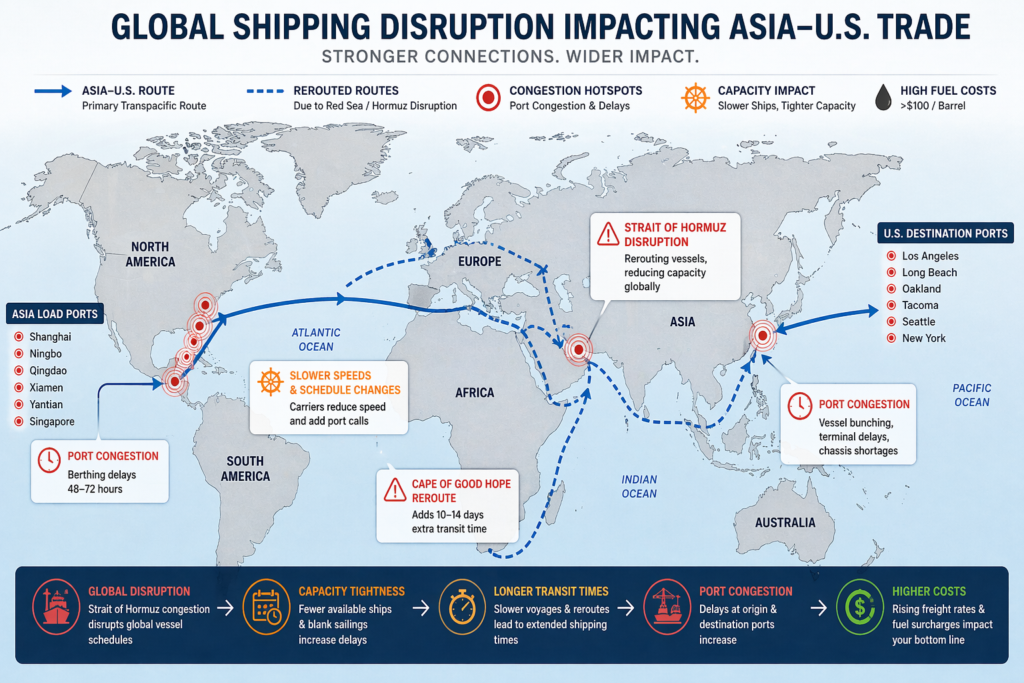
Recent geopolitical tensions affecting the Strait of Hormuz are not directly blocking shipping routes between Asia and the United States. However, the global ripple effects are now significantly impacting Asia–U.S. shipping schedules, transit times, and costs.
In simple terms:
👉 Ships are still moving — but they are moving slower, arriving later, and facing congestion worldwide.
This “butterfly effect” is creating serious challenges for importers relying on transpacific supply chains.
Why This Matters for U.S. Importers
Even though the Strait of Hormuz is far from the Pacific trade lane, disruptions there are:
- Re-routing vessels globally
- Reducing available shipping capacity
- Increasing congestion at major ports
- Driving up fuel and freight costs
As a result, Asia–U.S. shipping reliability has dropped sharply, and delivery timelines are becoming increasingly unpredictable.
3 Key Impacts on Asia–U.S. Shipping
📉 1. Schedule Delays & Declining Reliability
Global shipping networks are highly interconnected. When vessels are delayed in one region, the effects spread quickly.
What’s happening:
- Major Chinese ports (Shanghai, Ningbo, Qingdao) are experiencing 48–72 hour berthing delays
- Carriers are introducing blank sailings (cancelled voyages) to manage disruptions
- Increased risk of cargo rollovers (your shipment gets pushed to the next vessel)
What it means for you:
- Longer wait times before cargo even leaves Asia
- Reduced schedule reliability
- Higher risk of missed delivery commitments
⏳ 2. Longer Transit Times & Arrival Delays
Even shipments that depart on time are facing delays along the journey and at destination ports.
Key drivers:
- Carriers are slowing vessel speeds to manage fuel costs (oil prices exceed $100/barrel)
- Some routes now include additional port calls
- U.S. ports are experiencing “ship bunching” (multiple vessels arriving at once)
At U.S. ports:
- Congestion at Los Angeles and Long Beach
- Ongoing chassis shortages and terminal constraints
- Cargo may sit several days to a week after arrival
Impact:
- Extended transit times
- Delayed cargo availability
- Disruptions to inland transportation and delivery schedules
📈 3. Rising Freight Rates & New Surcharges
Shipping costs are increasing as carriers respond to global disruption.
Current trends:
- Freight rates from Asia to the U.S. West Coast are up approximately 50%
- Carriers are applying Bunker Adjustment Factors (BAF) due to higher fuel costs
- Additional surcharges may continue as market pressure builds
What this means:
- Higher landed costs per container
- Increased pressure on margins
- Budgeting uncertainty for importers
📊 Summary: How This Impacts Your Supply Chain
| Area | Current Situation | Business Impact |
|---|---|---|
| Origin Ports (Asia) | Congestion, 2–3 day delays | Need earlier booking and planning |
| Ocean Transit | Slower speeds, schedule changes | Longer and less predictable transit times |
| U.S. Ports | Vessel bunching, congestion | Delays in unloading and pickup |
| Costs | Higher rates + fuel surcharges | Increased logistics expenses |
💡 How to Reduce Risk: Practical Strategies
To manage ongoing Asia–U.S. shipping delays, businesses should adapt quickly.
1. Extend Delivery Lead Times
Build additional buffer into your timelines.
👉 Recommended: Add 2–3 extra weeks from booking to final delivery
2. Book Capacity Early
Do not wait until cargo is ready.
- Secure space 2–3 weeks in advance
- Request confirmed bookings from carriers
- Reduce risk of shipment rollovers
3. Improve Communication & Visibility
Stay proactive with your logistics partners.
- Maintain close contact with freight forwarders
- Monitor port congestion and carrier updates
- Track shipments more frequently
Final Takeaway
The Strait of Hormuz disruption is a reminder that global supply chains are deeply interconnected.
Even events outside your trade lane can lead to:
- Slower shipping
- Higher costs
- Increased uncertainty
For importers, the key to navigating this environment is planning earlier, building flexibility, and staying informed.