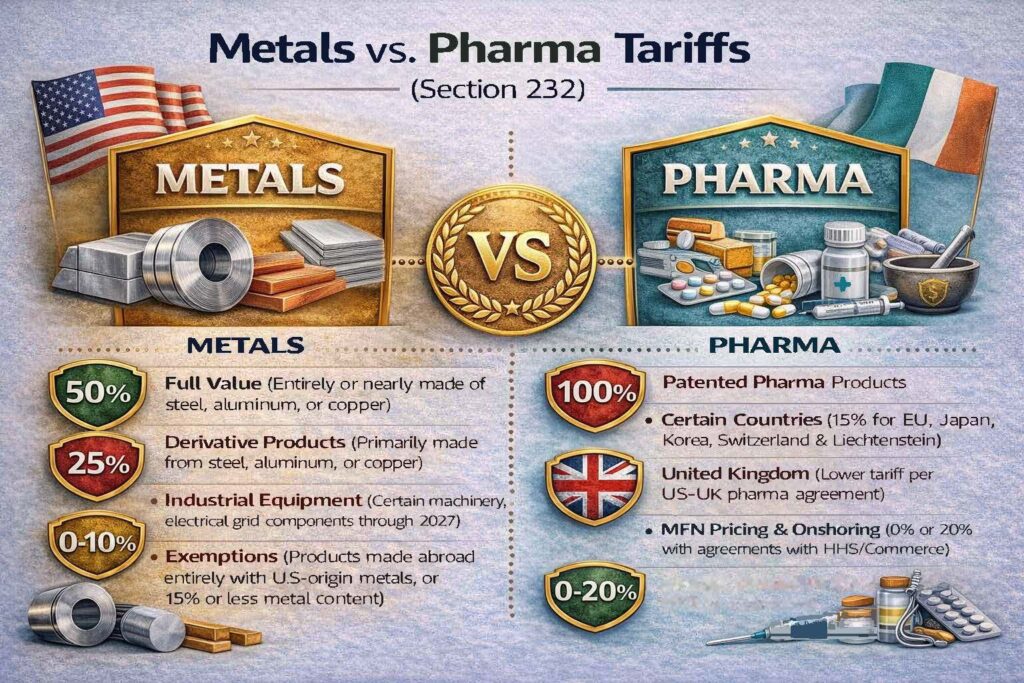
The Trump Administration has announced major updates to Section 232 tariffs, introducing new duty structures for steel, aluminum, and copper, while also imposing significant tariffs on pharmaceutical imports.
These changes aim to strengthen domestic manufacturing, address national security concerns, and reshape global supply chains.
Key Changes to Section 232 Tariffs on Metals
The April 2 proclamation introduces a new methodology for calculating tariffs, ensuring that duties are applied based on the full value of imported goods, rather than potentially undervalued foreign pricing.
New Tariff Structure
The updated Section 232 tariffs are structured as follows:
- 50% tariff
Applies to products made entirely or almost entirely of steel, aluminum, or copper
(e.g., steel coils, aluminum sheets) - 25% tariff
Applies to derivative products substantially made from these metals - 15% tariff (temporary through 2027)
Applies to certain industrial machinery and electrical grid equipment to support U.S. infrastructure expansion - 10% tariff (preferential)
Applies to products manufactured abroad using 100% U.S.-origin metals - 0% tariff threshold
Products containing 15% or less metal content are exempt from Section 232 duties
These tariffs will take effect April 6, 2026, at 12:01 a.m. ET. See ANNEXES-I-A-I-B-II-III-IV for more details.
Pharmaceutical Tariffs Introduced Under Section 232
In a separate executive order, the administration introduced new pharmaceutical tariffs, marking a significant expansion of Section 232 beyond metals.
Key Pharmaceutical Tariff Rates
- 100% tariff
Applies to patented pharmaceutical products and ingredients - 15% tariff
Applies to imports from:- European Union
- Japan
- Korea
- Switzerland and Liechtenstein
- Reduced tariff (UK-specific)
Applies under a separate U.S.–UK pharmaceutical agreement
Incentives for U.S. Manufacturing and Pricing Compliance
The administration introduced tariff incentives tied to domestic investment and pricing agreements:
- 0% tariff (through Jan. 20, 2029)
For companies that:- Enter into Most Favored Nation (MFN) pricing agreements with HHS
- Commit to onshoring production with the Department of Commerce
- 20% tariff
For companies that commit only to onshoring without MFN pricing agreements
These incentives are designed to encourage domestic pharmaceutical manufacturing and price transparency.
Enforcement and Compliance Measures
The administration emphasized that enforcement will be strict.
Measures include:
- External audits
- Monitoring of import valuations
- Potential tariff increases for non-compliance
This signals increased scrutiny from both CBP and other federal agencies.
What This Means for Importers
The updated Section 232 tariffs will have broad implications:
- Increased landed costs for metals and pharmaceuticals
- Greater compliance requirements for valuation and origin
- Strategic incentives for reshoring production
- Expanded use of tariffs as industrial policy tools
Importers should review supply chains, sourcing strategies, and tariff exposure immediately.
CBP Guidance on Section 232 Tariffs for Steel, Aluminum, and Copper
U.S. Customs and Border Protection (CBP) has issued guidance on how to implement the updated Section 232 tariffs on steel, aluminum, and copper imports following the April 2 proclamation.
The guidance clarifies how duties apply, which products are exempt, and how importers should interpret the new rules.
Key Takeaways from CBP Guidance
1. Tariffs Apply to Full Value of Imports
New duties of 10% to 50% are applied to the full customs value of covered metal products and derivatives.
2. Only One Metal Tariff Applies
If a product contains multiple metals (e.g., steel and aluminum), only one Section 232 tariff applies, not multiple.
3. Low Metal Content Exemption
Products with less than 15% metal content are generally exempt, unless classified under specific HTSUS chapters (72–76).
4. Country-Specific Rules Remain Important
- Russia:
Aluminum products remain subject to 200% tariffs - United Kingdom:
Reduced tariffs apply if strict origin rules are met (95% smelt/melt requirements) - Existing agreements with:
- EU
- Japan
- Korea
remain in effect for certain products
5. Origin Reporting Requirements Continue
Importers must continue reporting:
- Steel: country of melt and pour
- Aluminum: country of smelt and cast
- Copper: reporting requirements expected soon
6. Drawback Is Available
Importers may claim drawback refunds for Section 232 duties under qualifying conditions.
7. Foreign Trade Zone (FTZ) Rules Apply
Affected goods entering FTZs must generally use privileged foreign status, meaning duties are locked in at admission.
Why This Guidance Matters
The CBP guidance confirms that Section 232 tariffs are:
- Broad in scope
- Technically complex
- Heavily dependent on classification and origin
Even small differences in metal content or origin can significantly impact duty rates.
What Importers Should Do
- Review HTS classifications carefully
- Confirm metal content percentages
- Validate origin documentation
- Monitor CBP updates and future CSMS messages